
Traditional Stucco Installation Vancouver — Vancouver Stucco Guys
Traditional stucco installation is one of our most requested stucco installation Vancouver services — and for good reason. Portland cement stucco has been used as an exterior wall cladding in British Columbia for over a century. It is hard, dense, impact-resistant, and when installed correctly over a properly detailed building envelope, it is one of the most durable exterior finishes available for residential and commercial construction in this climate. Vancouver Stucco Guys provides traditional stucco installation across Vancouver, Burnaby, Surrey, Richmond, Coquitlam, North Vancouver, West Vancouver, and Delta for new construction, additions, and full re-cladding projects. If you are still researching exterior cladding options, our learning centre page on what is stucco covers the material fundamentals before you make a system decision.
Get A Free Quote Now!
Our experienced professionals are committed to providing the best stucco services at a fair price. We take pride in our reputation for providing quality work and customer satisfaction.
What Traditional Stucco Installation Involves
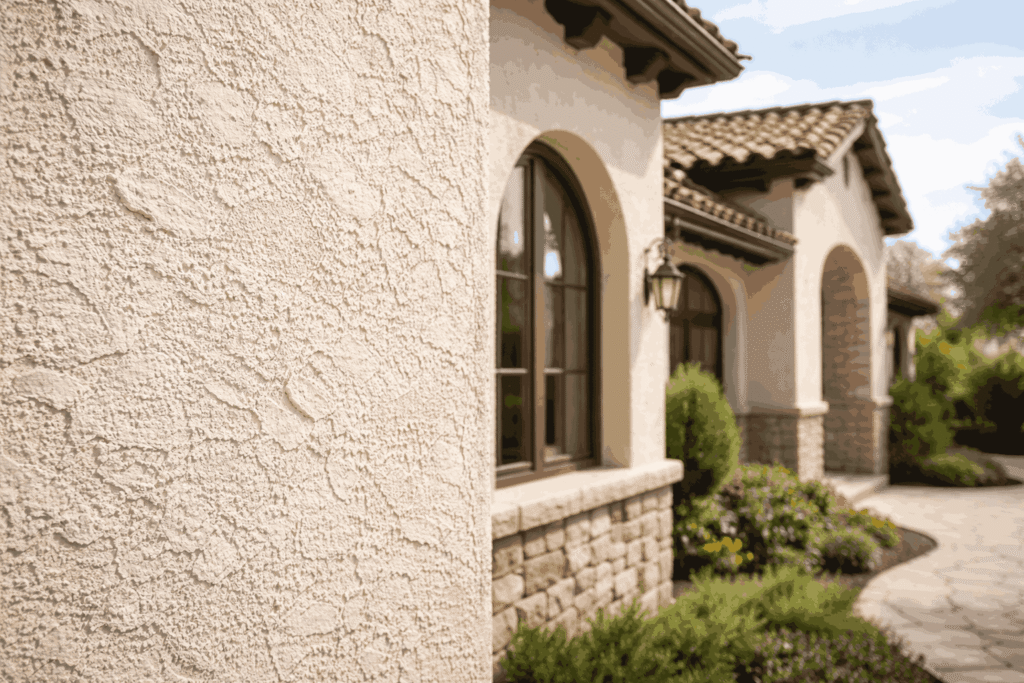
Traditional stucco — also called hard-coat stucco or cement stucco — is a site-applied wall system built from Portland cement, sand, water, and in some formulations, hydrated lime. It is applied in successive coats over metal lath attached to the building’s framing, building up to a total installed thickness of approximately 7/8 inch. Each coat serves a specific structural and functional role in the finished assembly.
Unlike factory-manufactured panel systems or pre-finished cladding products, traditional stucco is built on-site, coat by coat, from raw materials. This means installation quality is entirely dependent on the knowledge and technique of the applicator — there is no factory quality control backstop. The material is unforgiving of shortcuts: incorrect mix proportions, insufficient cure time between coats, inadequate lath installation, or flashing details that are not properly integrated will all produce systems that fail prematurely despite appearing correct at completion.
Traditional stucco installation is appropriate for:
- New residential construction where a durable, low-maintenance exterior finish is the primary requirement
- Additions to existing stucco-clad buildings where the new wall sections must match the existing system
- Full re-cladding projects replacing failed exterior materials on wood-frame or masonry construction
- Commercial buildings where surface hardness and impact resistance are specification priorities
- Heritage and character homes in Vancouver where the original stucco exterior is a defining architectural feature

Who Are We?
Vancouver Stucco Guys is a family-owned and operated stucco construction company in the Vancouver area since 2000. We specialize in the restoration and installation of stucco, whether it is a cosmetic repair or full re-coating. Besides, we are licensed and insured so that you can be sure of quality workmanship every time.
Also, we take pride in our reputation for being reliable and responsive to our customers’ needs. Our team is experienced and skilled, so we can easily handle any size project.
Moreover, we’ll go the extra mile to get the job done–and ensure you’re happy with the results! Contact us today for your stucco restoration project!
The Three-Coat System: How Traditional Stucco Is Built
Most traditional stucco installations follow a three coat stucco system consisting of scratch coat, brown coat, and finish coat — each applied in sequence with mandatory cure periods between coats. This sequence is not a convention that can be compressed for schedule efficiency; it is a technical requirement that determines the structural integrity and long-term performance of the finished system.
Scratch Coat
The scratch coat is the first stucco layer applied directly to the metal lath. It is pressed firmly into and through the lath to create a strong mechanical key between the stucco and the wall. Once applied, the surface is scratched horizontally to create a profile for the brown coat to bond to. The scratch coat is typically 3/8 inch thick and must be allowed to cure — typically 48 hours minimum, longer in cool or humid conditions — before the brown coat is applied. Applying the brown coat over an insufficiently cured scratch coat is one of the most common causes of delamination in traditional stucco systems.
Brown Coat
The brown coat is the leveling layer. It is applied over the cured scratch coat and brought to a consistent depth across the full wall area, creating a flat, stable substrate for the finish coat. Total thickness at the brown coat stage is typically 3/4 inch. The brown coat must also cure fully before the finish coat is applied — in Vancouver’s climate, this typically means a minimum of seven days, though longer cure periods produce better results. The brown coat surface is dampened before finish coat application to control suction and ensure the finish coat bonds and cures correctly.
Finish Coat
The finish coat is the visible exterior layer — the component that determines the building’s texture profile and initial colour. Finish coats for traditional stucco are typically 1/8 inch thick and are applied and textured in a single operation. Common finish textures include sand finish, dash finish, float finish, and skip trowel. Colour is achieved through integral pigment added to the site-batched mix or through a field-applied coating after the stucco has cured.

Building Envelope Requirements for Traditional Stucco
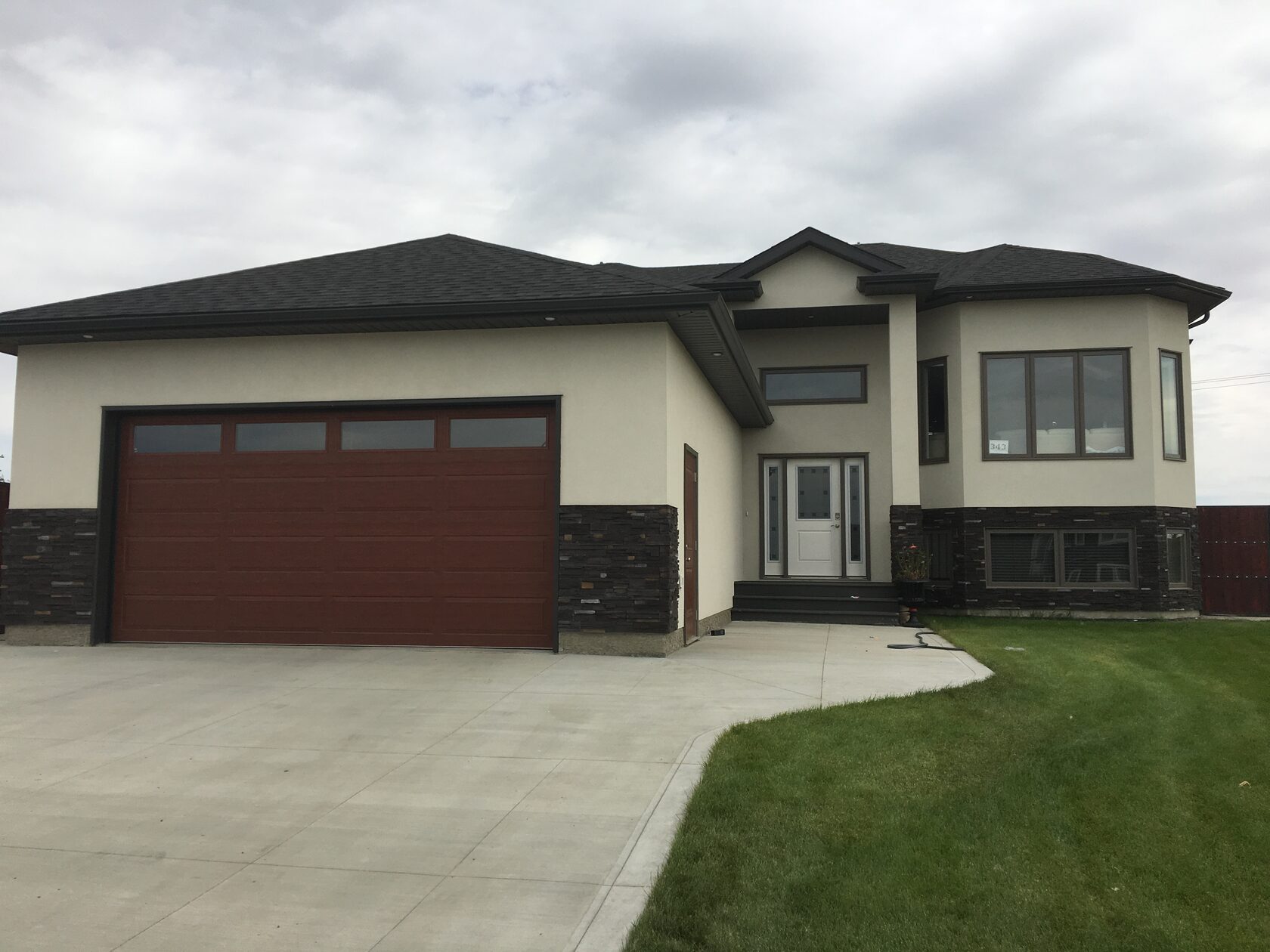
The performance of a traditional stucco system over its service life is determined as much by the building envelope assembly beneath the stucco as by the stucco coats themselves. In Vancouver’s rainfall climate, the water-resistive barrier, drainage plane, and flashing details at every opening and penetration are not optional refinements — they are the baseline requirements for a system that will last.
Water-Resistive Barrier
Grade D building paper or appropriate housewrap is installed in correct horizontal courses over the sheathing, lapped so upper courses shed water over lower courses, and fully integrated with window, door, and penetration flashings before lath installation begins.
Drainage Plane
A drainage gap between the WRB and the metal lath allows moisture that penetrates the stucco coating to exit at the weep screed at the base of the wall rather than becoming trapped in the wall assembly. In Metro Vancouver, a drainage plane is standard practice on all new traditional stucco installations.
Flashing Integration
Every window, door, roof-to-wall transition, and penetration through the stucco wall requires correctly installed and integrated flashing. Flashing failures account for the majority of water intrusion issues in traditional stucco systems — and on new installations, there is no reason for them to be present. Vancouver Stucco Guys does not proceed to lath installation until all flashing details have been correctly completed.
Metal Lath
Self-furring galvanized metal lath is installed over the drainage plane and fastened to framing members at specified intervals per the BC Building Code. Lath gauge, fastener type, minimum lap at joints, and reinforcement at corners and stress points are all part of a correctly installed lath system.
Testimonials

Great stucco work done after roofing flashing was installed around two stucco chimneys. Professional, responsive, on time with given timeline, and great clean up when done with the job. I would recommend Vancouver Stucco Guys for your stucco repair needs!
– Alex
These are the go to guys for residential stucco repairs. Had large and small holes from woodpeckers as well as numerous significant cracks. Looks almost brand new. Would use again. Highly Recommend Vancouver Stucco Guys!
– Tony
Very Professional Staff and are experts at commercial and hospitality renovations from stucco repair to hotel re-branding. Great customer service. Job well done always. I recommend this company.
– Morgan
Our Traditional Stucco Installation Process
1. Pre-Installation Assessment
We review the project scope, substrate condition, and framing schedule. Substrate deficiencies — sheathing gaps, framing irregularities, or moisture-related issues — are identified and resolved before the WRB installation begins.
2. WRB and Flashing
Building paper is installed in correct course sequence. All window, door, and penetration flashings are integrated and inspected before lath installation proceeds.
3. Lath Installation
Self-furring metal lath is installed over the drainage plane, fastened to framing at correct centres with appropriate lap at all joints and corner reinforcement at stress points.
4. Scratch Coat
Portland cement scratch coat is applied and keyed firmly into the lath. Surface is scratched horizontally and allowed to cure fully before brown coat application.
5. Brown Coat
Leveling coat is applied to the correct depth and brought to a consistent plane across the full wall area. Cure period is observed before finish coat application begins.
6. Finish Coat
Finish coat is applied in the specified texture and colour. Material is batched consistently to minimize colour variation across the wall area.
7. Inspection and Documentation
Completed installation is inspected against the specified scope. Materials used, system specification, and workmanship warranty are documented and provided to the owner.

Why Local Experience Matters for Restoration Projects
Stucco restoration in Metro Vancouver involves conditions specific to this climate and construction history. Contractors without local experience will not recognize the failure patterns common to 1990s wood-frame construction, will not be familiar with the stucco products and substrates used in that era, and will not detail flashing and drainage to withstand Vancouver’s rainfall volumes and freeze-thaw cycling.
The BC Housing Research Centre has documented extensively how building envelope failures in British Columbia are linked to inadequate drainage plane design and flashing details — not simply to stucco as a cladding material. Restoration work that does not address these fundamentals will not produce a durable result. According to the Homeowner Protection Office, exterior cladding remediation on wood-frame buildings requires licensed contractor workmanship and in many cases building permit compliance. Vancouver Stucco Guys operates within these requirements on all restoration projects.
Areas We Serve
Vancouver Stucco Guys provides traditional stucco installation throughout Metro Vancouver:
1. Vancouver — New construction, additions, and re-cladding across all neighbourhoods
2. Traditional stucco installation Burnaby — Residential new builds and character home re-cladding
3. Traditional stucco installation Surrey — New residential construction and additions
4. Richmond — Residential new construction and re-cladding
5. Coquitlam — Tri-Cities residential and commercial new builds
6. North Vancouver — Hillside residential and character home projects
7. West Vancouver — Coastal residential and estate new construction
8. Delta — Residential new builds and exterior re-cladding

Comparing Traditional Stucco With Other Systems
Homeowners and builders often compare traditional stucco installation with acrylic stucco installation before committing to a system. The practical differences come down to surface hardness, colour behaviour, and repair characteristics.
Traditional stucco produces a harder, denser surface than acrylic finish systems — more resistant to impact, surface abrasion, and the kind of mechanical damage that occurs on properties with high foot traffic or exposure to maintenance equipment. It is the specification of choice when durability and surface toughness are the primary requirements.
Acrylic finishes offer advantages in colour consistency and flexibility — factory-tinted acrylic products eliminate the colour variation inherent in site-batched cement finishes, and the polymer content allows the finish to accommodate minor movement without hairline cracking. For projects where colour accuracy across large wall areas is a priority, acrylic finish coats are the more appropriate specification.
If you are evaluating broader exterior cladding options, our comparison of EIFS vs traditional stucco covers the performance, cost, and installation differences between hard-coat cement stucco and insulated finish systems in detail. The comparison is worth reviewing before committing to a system specification, particularly on projects where thermal envelope performance is part of the design brief.
Get a Traditional Stucco Installation Estimate
Traditional stucco installed correctly is a long-term investment in a building’s exterior. The system’s performance over forty or more years depends entirely on what happens during installation — the building envelope details, the coat sequence, the cure management, and the finish application. These decisions cannot be corrected after the wall is closed.
Vancouver Stucco Guys provides pre-installation consultations and detailed estimates across Metro Vancouver. We specify the correct system for the building type and exposure, install to BC Building Code standards, and provide full documentation at project completion.
For a detailed breakdown of what your project may involve financially, see our guide on stucco installation cost in Vancouver.
Request a free traditional stucco installation estimate — contact Vancouver Stucco Guys today.