
Sand Stucco Finish Vancouver — Vancouver Stucco Guys
A sand stucco finish is one of the most popular textures available through our decorative stucco Vancouver services — and across Metro Vancouver’s residential building stock, it is one of the most consistently specified exterior stucco finishes on both new construction and re-cladding projects. The finish is produced by applying a fine-aggregate finish coat and floating it to a uniform, lightly textured surface that is subtle enough to suit contemporary architecture while being forgiving enough in application to produce consistent results across large wall areas. Vancouver Stucco Guys applies sand stucco finishes across Vancouver, Burnaby, Surrey, Richmond, Coquitlam, North Vancouver, West Vancouver, and Delta for residential, strata, and commercial properties. This page covers what a sand finish is, where it performs best, how it compares to other finish options, and what the application process involves.
Get A Free Quote Now!
Our experienced professionals are committed to providing the best stucco services at a fair price. We take pride in our reputation for providing quality work and customer satisfaction.
What a Sand Stucco Finish Is
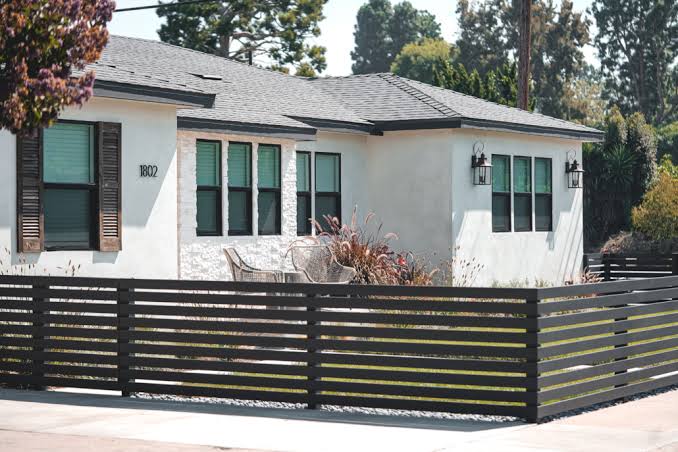
A sand stucco finish is a finish coat applied using a mix containing fine silica sand aggregate, floated to a consistent texture after application. The aggregate size — typically 30 mesh to 20 mesh fine sand — produces a surface that is visibly textured at close range but reads as a relatively smooth, uniform wall surface at building scale. The texture is fine enough to avoid the pronounced shadow pattern of coarser finishes like dash, but present enough to provide visual depth that a completely smooth trowel finish does not.
The floated application method — in which the applicator uses a sponge float or foam float to work the surface after the finish coat is applied — produces the characteristic fine, consistent texture of a sand finish. The float action brings aggregate particles to the surface while embedding them into the finish coat, creating a surface that is tactile and slightly rough to the touch but visually uniform across the wall.
Sand finish is available in both Portland cement and acrylic formulations. Cement sand finishes are site-batched with sand aggregate added to the finish coat mix; acrylic sand finishes use factory-tinted products with pre-blended aggregate that provide better colour consistency across large wall areas. For projects where colour accuracy is a design requirement, acrylic sand finish products are the more reliable specification.

Who Are We?
Vancouver Stucco Guys is a family-owned and operated stucco construction company in the Vancouver area since 2000. We specialize in the restoration and installation of stucco, whether it is a cosmetic repair or full re-coating. Besides, we are licensed and insured so that you can be sure of quality workmanship every time.
Also, we take pride in our reputation for being reliable and responsive to our customers’ needs. Our team is experienced and skilled, so we can easily handle any size project.
Moreover, we’ll go the extra mile to get the job done–and ensure you’re happy with the results! Contact us today for your stucco restoration project!
Where Sand Stucco Finish Vancouver Performs Best
Residential New Construction and Re-Cladding
Sand stucco finish is a default specification on a wide range of Vancouver residential projects — both new construction and full exterior re-cladding. Its versatility makes it appropriate across a broad range of residential architectural styles: it suits contemporary homes where a clean but not completely flat exterior is the design intent, and it works equally well on traditional residential architecture where a fine, even texture is preferable to the coarser profiles of dash or roughcast finishes.
On re-cladding projects where the existing stucco had a sand finish profile, matching the new finish to the original is achievable with the correct aggregate specification and float technique — making sand finish one of the more repair-compatible finishes in the stucco range.
Strata and Multi-Family Buildings
Sand finish is widely used on low-rise and mid-rise strata buildings across Metro Vancouver. On large building facades where finish consistency across multiple elevations is a practical requirement, sand finish’s tolerance for minor application variation — relative to smooth finish — makes it a practical specification that produces uniform results without demanding the preparation standard of a hard-trowel smooth finish.
The fine aggregate surface also performs well in Vancouver’s rainfall climate: the slight texture profile sheds surface water effectively without trapping moisture at the wall surface, and it weathers consistently without the pronounced dirt-retention patterns that can develop on coarser textures in urban environments.
Commercial and Mixed-Use Properties
On commercial and mixed-use buildings where the design intent is a clean, professional exterior without the complete flatness of a smooth finish, sand finish provides a middle-ground specification that is practical to apply across large commercial wall areas and consistent in appearance at street level.


Sand Stucco Finish vs. Other Finish Textures
Sand Finish vs. Smooth Finish
Many homeowners compare a sand stucco finish with a smooth stucco finish when selecting the appearance of their exterior — and the choice between them comes down to design intent, base coat preparation standard, and applicator skill requirements.
A smooth finish removes all aggregate texture from the surface, producing a flat, continuous wall plane that reads as a single material across the full elevation. It is the most architecturally refined finish option but also the most demanding to execute correctly — every variation in the brown coat and every inconsistency in trowel pressure is visible on a smooth surface in raking light.
Sand finish introduces fine aggregate texture that provides a degree of visual masking for minor troweling variations and brown coat inconsistencies. For projects where a clean contemporary finish is the design intent but where the base coat preparation standard or project timeline does not support a smooth finish specification, sand finish is the practical alternative.
Sand Finish vs. Lace Finish
For a more decorative and hand-crafted appearance, some homeowners prefer a lace stucco finish — a skip-trowel applied texture that produces an organic, varied surface with more pronounced high and low areas than sand finish. Lace finish is commonly associated with Spanish Colonial and Mediterranean-influenced residential architecture and is the appropriate specification where a more artisan quality surface is the design intent.
Sand finish produces a more uniform and controlled texture than lace — consistent across the wall area rather than varied by applicator hand movement. For contemporary and transitional residential architecture, sand finish is the more appropriate specification; for traditional and character-influenced designs, lace or dash finishes may be the better fit. Our guide on best stucco finishes for Vancouver homes covers the full comparison in context and is worth reviewing before finalising a finish specification.
Testimonials

Great stucco work done after roofing flashing was installed around two stucco chimneys. Professional, responsive, on time with given timeline, and great clean up when done with the job. I would recommend Vancouver Stucco Guys for your stucco repair needs!
– Alex
These are the go to guys for residential stucco repairs. Had large and small holes from woodpeckers as well as numerous significant cracks. Looks almost brand new. Would use again. Highly Recommend Vancouver Stucco Guys!
– Tony
Very Professional Staff and are experts at commercial and hospitality renovations from stucco repair to hotel re-branding. Great customer service. Job well done always. I recommend this company.
– Morgan
Our Sand Stucco Finish Application Process
1. Base Coat Assessment
We assess the brown coat for flatness, cure status, and moisture content before finish application begins. Where the base coat requires additional preparation or cure time, we address this before proceeding.
2. Material and Colour Confirmation
Finish coat material — cement or acrylic — is confirmed along with aggregate specification and colour. For acrylic products, factory-tinted material is ordered to the specified colour. For cement finishes, pigment proportions are tested on a sample panel before full-scale application.
3. Surface Dampening
The brown coat is dampened uniformly across the full wall area to equalise suction before finish coat application. This step is particularly important on sand finish applications where colour consistency across the full facade is a visible quality indicator.
4. Finish Coat Application
Finish coat material is applied at the correct thickness across the wall surface. On large wall areas, material is applied and floated in manageable sections to maintain a wet edge and avoid visible lap lines at section boundaries.
5. Float Texture Application
The finish coat is floated with a sponge or foam float as the material reaches the correct stage of set. Float direction and pressure are kept consistent across the full wall area to produce a uniform texture profile. Aggregate particles are worked to a consistent surface distribution during this step.
6. Edge and Transition Detailing
All finish edges at control joints, window and door perimeters, and changes of plane are detailed cleanly. Sand finish edges require less precision detailing than smooth finish but should be consistent in texture profile up to the transition line.
7. Final Review
Completed finish is reviewed for texture consistency, colour uniformity, and surface quality before the material reaches full cure.

Base Coat Preparation for Sand Finish Application
Although sand finish is more forgiving than smooth finish in its tolerance for minor base coat variation, correct brown coat preparation still directly affects the quality of the finished result. The brown coat must be cured fully before finish coat application — a minimum of seven days in normal conditions, longer in cool or wet weather. Application of sand finish over an under-cured brown coat produces colour variation and surface cracking as the base continues to cure beneath the finish.
The brown coat surface should be dampened before finish coat application to equalise suction across the wall. Differential suction — where some areas of the brown coat absorb moisture from the finish coat faster than others — produces visible colour and texture variation in the finished sand surface. On large wall areas, managing suction uniformity is a primary quality control step.
According to the Portland Cement Association, finish coat materials applied over Portland cement base coats should be mixed at a consistent water-cement ratio throughout the application to maintain colour uniformity. Variation in mixing water between batches on large wall areas is one of the most common causes of visible colour bands in sand finish applications.
Areas We Serve
Vancouver Stucco Guys provides sand stucco finish installation throughout Metro Vancouver:
1. Vancouver — Residential, strata, and commercial projects across all neighbourhoods
2. Sand stucco finish Burnaby — Strata buildings and residential new construction
3. Sand stucco finish Surrey — New residential developments and commercial properties
4. Richmond — Residential and strata new construction
5. Coquitlam — Tri-Cities residential and commercial
6. North Vancouver — Hillside residential and new builds
7. West Vancouver — Coastal residential and estate properties
8. Delta — Residential new construction and re-cladding
Maintenance and Colour Refresh for Sand Stucco Finish
A correctly applied sand stucco finish requires routine maintenance consistent with any stucco exterior — annual inspection, prompt sealing of developing cracks, and caulking maintenance at control joints and penetrations on a five to seven year cycle. The fine aggregate surface is effective at shedding surface water and does not trap debris in the way that coarser textures can, making routine cleaning straightforward.
When the colour on a sand finish exterior has faded or the owner wishes to update the building’s palette, a sand stucco finish can be refreshed with professional stucco painting using a breathable elastomeric or masonry coating. Coating a sand finish preserves the texture profile while updating the surface colour — provided the coating is applied at a thickness that does not fill the texture detail. According to the Stucco Manufacturers Association, coatings applied over stucco finishes should be vapour-permeable to allow the wall assembly to manage moisture without trapping it behind the coating layer — a particularly important specification requirement in Vancouver’s high-rainfall coastal climate.
Request a Water Damaged Stucco Repair Assessment
Water damage in a stucco wall system does not stabilize on its own. Moisture continues to migrate, substrates continue to deteriorate, and repair scope grows with time. Acting on early symptoms is consistently more cost-effective than waiting for the damage to become structurally significant.
Vancouver Stucco Guys provides on-site stucco assessments across Vancouver and Metro Vancouver. We identify moisture entry points, define the repair scope accurately, and provide a clear repair plan before any work begins.
For information on pricing, see our guide on water damage stucco repair cost.
Request a free stucco inspection — contact Vancouver Stucco Guys today.