
Stucco Crack Repair Vancouver — Vancouver Stucco Guys
Vancouver Stucco Guys provides professional stucco crack repair across Vancouver, Burnaby, Surrey, Richmond, Coquitlam, North Vancouver, West Vancouver, and Delta. Stucco cracking is the most common stucco problem in Vancouver reported by homeowners and property managers in Metro Vancouver — and also the most frequently mishandled. The correct stucco repair method depends entirely on the crack type, its cause, and whether it is stable or still moving. Applying the wrong method produces a repair that reopens within one or two seasons. With over 20 years of stucco repair experience in Metro Vancouver, Vancouver Stucco Guys identifies the cause of cracking before specifying the repair, ensuring the work holds long-term on both residential and commercial properties.
Get A Free Quote Now!
Our experienced professionals are committed to providing the best stucco services at a fair price. We take pride in our reputation for providing quality work and customer satisfaction.
Why Stucco Cracks in Vancouver
Stucco is a rigid, cement-based cladding material applied over a building structure that moves. Buildings expand and contract with temperature changes, settle incrementally over time, and flex under wind and seismic loads. Stucco does not move with the structure — it resists, and eventually cracks along the points of highest stress concentration.
In Metro Vancouver, several site-specific factors accelerate this process. The coastal climate delivers sustained moisture cycling throughout fall and winter. Water enters micro-fissures in the stucco surface, expands when temperatures drop below freezing in late fall and early spring, and mechanically widens the crack with each freeze-thaw cycle.
North and west-facing elevations — which receive less sun exposure and dry out more slowly — experience this deterioration at a higher rate than south-facing surfaces.
The result is that stucco cracking in Vancouver is not simply an ageing problem. It is an active, climate-driven failure process that progresses faster the longer it goes unaddressed. A hairline crack that allows minor water ingress in year one can become a delaminating section with moisture-saturated substrate in year three.

Who Are We?
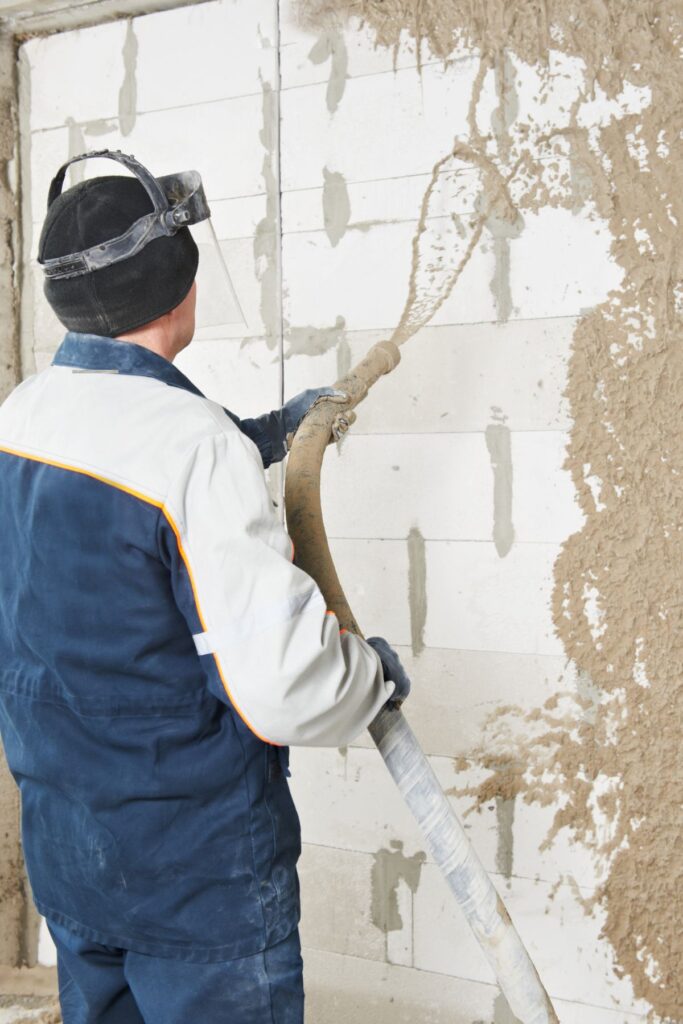
Vancouver Stucco Guys is a family-owned and operated stucco construction company in the Vancouver area since 2000. We specialize in the restoration and installation of stucco, whether it is a cosmetic repair or full re-coating. Besides, we are licensed and insured so that you can be sure of quality workmanship every time.
Also, we take pride in our reputation for being reliable and responsive to our customers’ needs. Our team is experienced and skilled, so we can easily handle any size project. We provide stucco repair in Burnaby, Surrey, Richmond, Coquitlam and many other areas.
Moreover, we’ll go the extra mile to get the job done–and ensure you’re happy with the results! Contact us today for your stucco restoration project!
Types of Stucco Cracks We Repair
Not all stucco cracks are the same. Identifying the crack type is the first step in specifying the correct repair. Vancouver Stucco Guys assesses crack pattern, width, depth, and activity level on every project before any repair method is selected.
Hairline Cracks
Hairline cracks are fine surface fractures less than 0.3 millimetres wide. They typically result from normal shrinkage during the curing of the finish coat and are common on stucco systems throughout Metro Vancouver. While hairline cracks do not immediately compromise the structural integrity of the stucco, they do allow moisture ingress over time. In Vancouver’s rainfall environment, untreated hairline cracks are a reliable precursor to deeper failure. Hairline crack repair involves surface consolidation, crack bridging with a flexible elastomeric coating, and texture reintegration.
Pattern Cracking (Map Cracking)
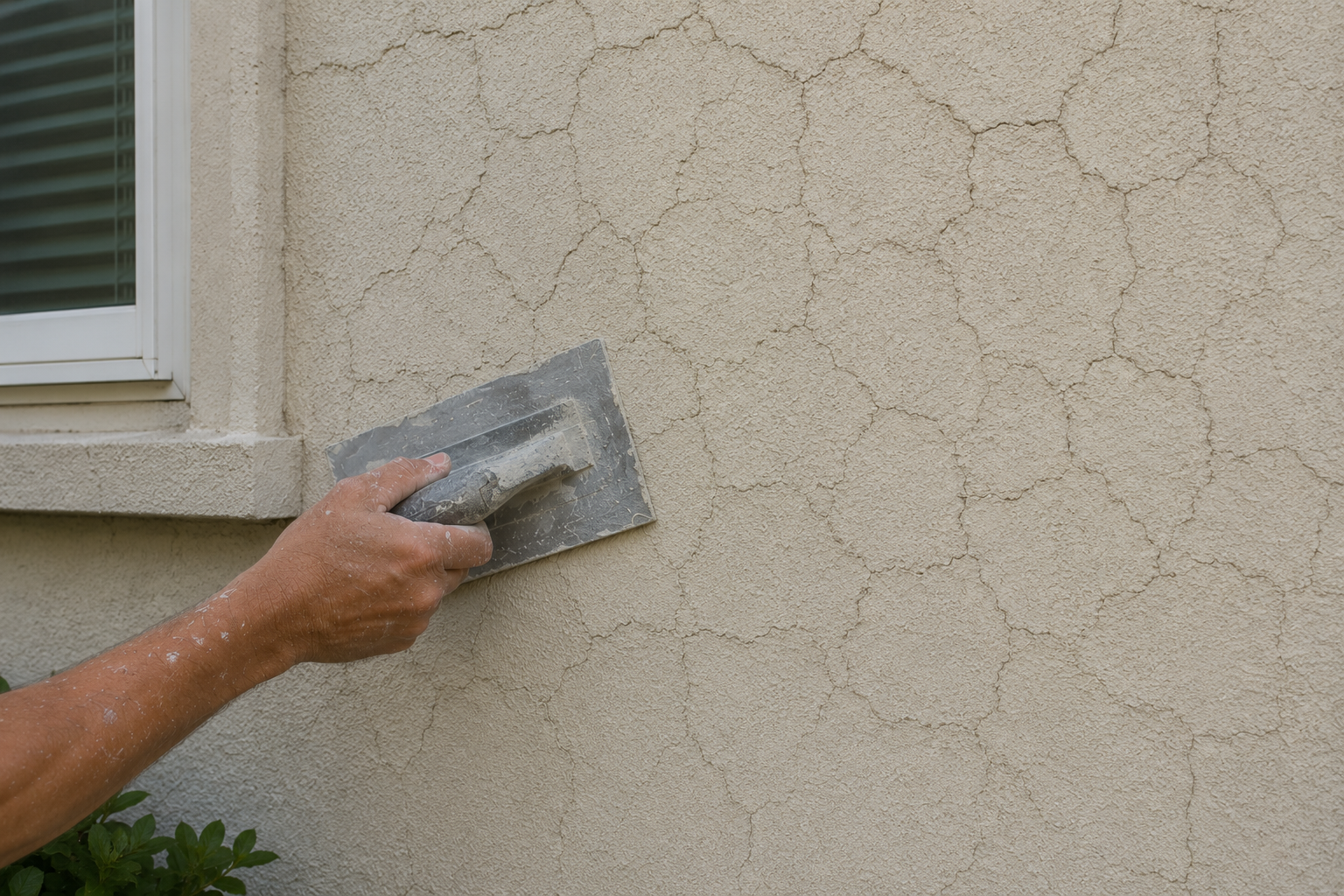
Pattern cracking — sometimes called map cracking or crazing — presents as a network of interconnected fine cracks distributed across a section of stucco surface, resembling a dried-mud pattern.
It is caused by excessive water content in the mix during application, application in high-heat or high-wind conditions that accelerate surface drying, or a finish coat applied too thickly. Pattern cracking affects the full depth of the finish coat and often indicates that the affected section requires removal and replacement rather than surface treatment alone.
Stress Cracks at Openings
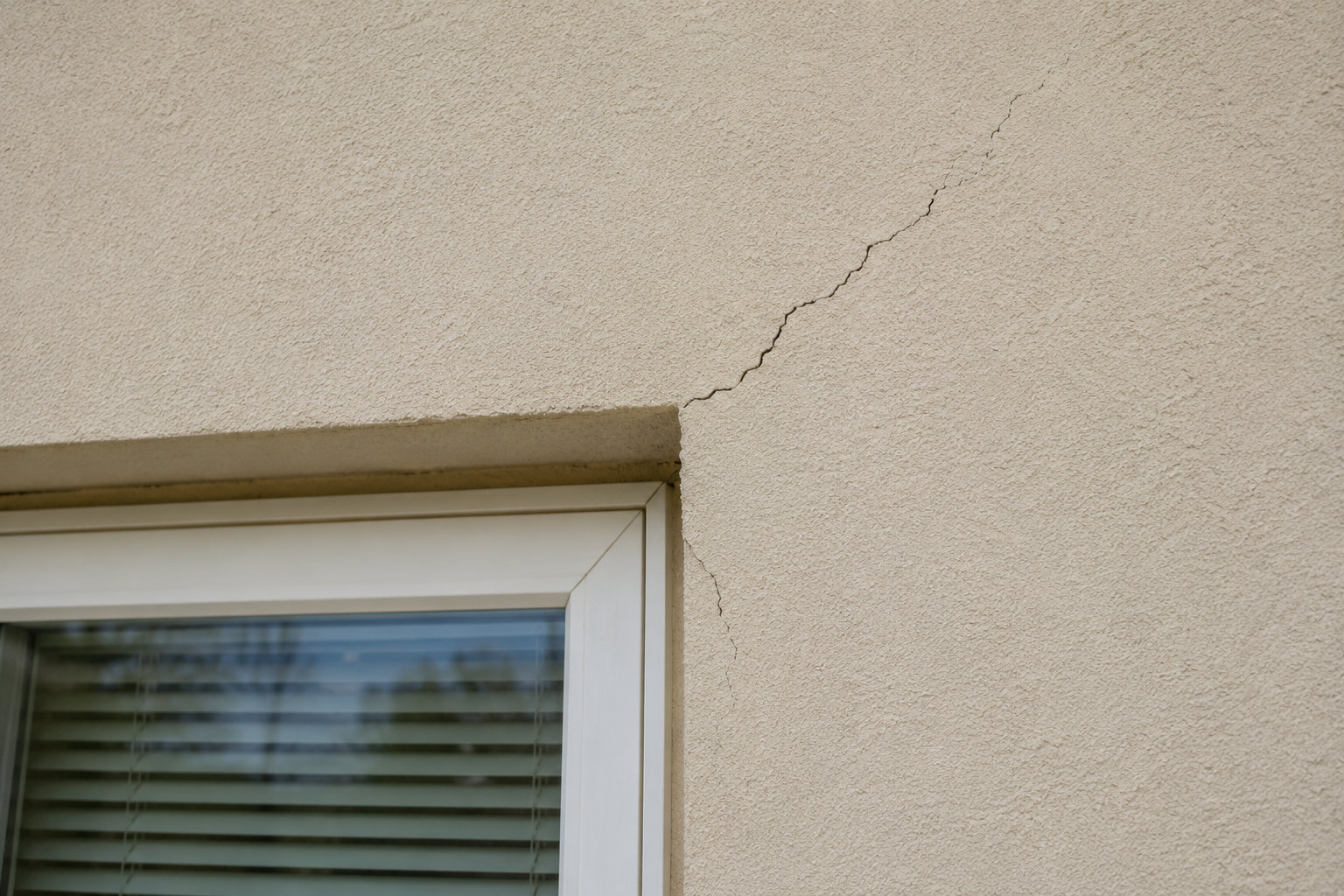
Diagonal cracks running at 45-degree angles from the corners of windows and doors are among the most common crack patterns on Vancouver residential buildings. They follow the lines of stress concentration that develop where the continuous stucco field meets a rigid opening frame. These cracks are structural in origin — they reflect movement in the framing around the opening, not just surface shrinkage. Repairing them without addressing the movement source or installing a control joint at the opening corner produces a repair that will reopen. We cut back these cracks, address the substrate and flashing condition at the opening reveal, and apply a repair system that accommodates ongoing movement.
Structural Cracks
Structural cracks are wider, deeper cracks that follow framing lines or run continuously across a large section of wall. They indicate significant building movement — foundation settlement, framing deflection, or seismic activity — and the stucco cracking is a symptom of the structural issue rather than a stucco failure in isolation. Structural cracks require assessment of the cause before any stucco repair is specified. In some cases, the structural issue must be addressed before the stucco repair is viable. We identify structural cracks during inspection and advise on the correct course of action.
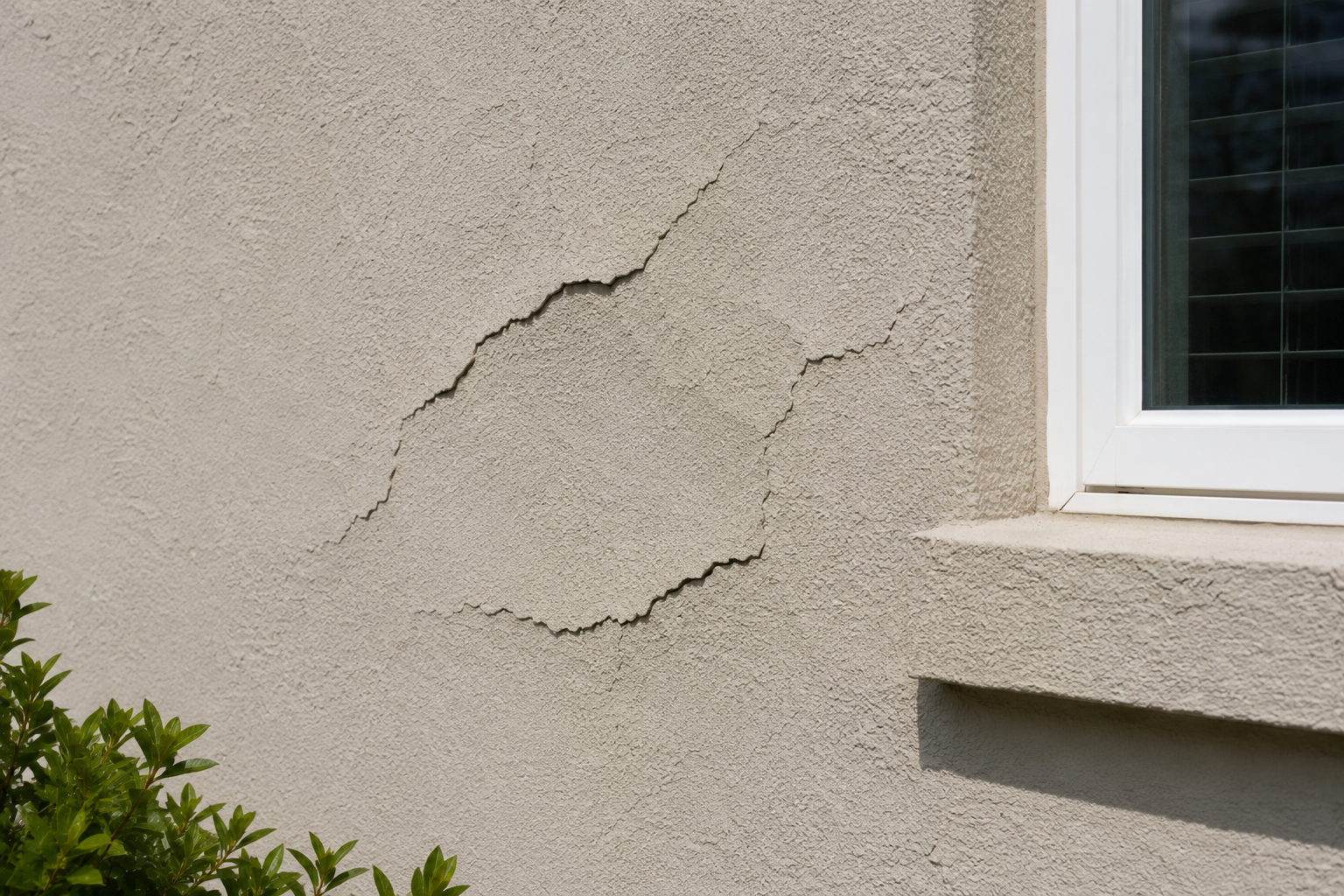
Delamination Cracks
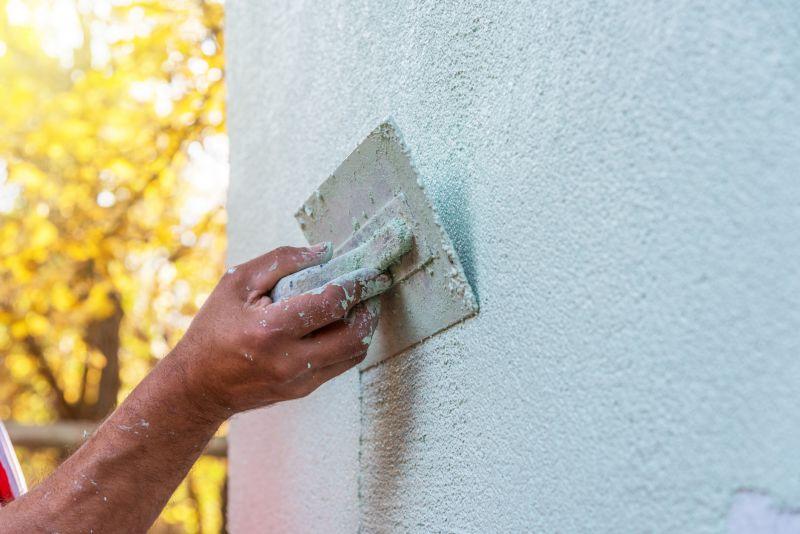
Delamination presents as sections of stucco that have separated from the coat beneath — visible as a hollow-sounding area when tapped, or as a bulging, tent-like separation from the wall. It is caused by moisture penetrating between coats, inadequate bonding of successive coats during original application, or freeze-thaw cycling that mechanically separates the layers. Delaminated stucco cannot be re-bonded in place. The separated section must be removed, the substrate assessed for moisture damage, and new stucco applied in the correct coat sequence.
Testimonials

Great stucco work done after roofing flashing was installed around two stucco chimneys. Professional, responsive, on time with given timeline, and great clean up when done with the job. I would recommend Vancouver Stucco Guys for your stucco repair needs!
– Alex
These are the go to guys for residential stucco repairs. Had large and small holes from woodpeckers as well as numerous significant cracks. Looks almost brand new. Would use again. Highly Recommend Vancouver Stucco Guys!
– Tony
Very Professional Staff and are experts at commercial and hospitality renovations from stucco repair to hotel re-branding. Great customer service. Job well done always. I recommend this company.
– Morgan
Our Stucco Crack Repair Process
Vancouver Stucco Guys follows a structured assessment and repair process on every crack repair project. The method varies by crack type but the assessment stages apply to all projects.
Crack Inspection and Classification
We begin with a full inspection of the reported crack and the surrounding stucco surface. We classify the crack by type, width, depth, and activity — distinguishing between stable cracks and those that are still moving due to ongoing building movement or active moisture cycling. The classification determines the repair method.
Moisture Assessment
For any crack where water intrusion is possible — which in Vancouver’s climate applies to nearly all cracks wider than a hairline — we carry out moisture testing of the stucco and substrate in the surrounding area. This step determines whether the repair scope is limited to the stucco surface or whether substrate damage behind the crack must also be addressed.
Crack Preparation
The crack is prepared according to the repair method required. Hairline cracks are cleaned and primed. Wider cracks are routed to a consistent width and depth to accept a proper backer rod and sealant system. Deep or delaminated sections are cut back to sound, well-bonded stucco at the perimeter before any new material is applied. Preparation directly determines the longevity of the repair — undercutting this step is the most common cause of premature crack repair failure.
Repair Application
New stucco is applied in the correct number of coats for the repair depth, using mix designs compatible with the existing system. Each coat is applied at the specified thickness and allowed to cure before the next coat proceeds. For moving cracks, a flexible sealant or crack isolation membrane is incorporated into the repair to accommodate future movement without re-cracking.
Texture Matching and Finish
The finish coat is applied and textured to match the surrounding stucco surface. Lace, dash, sand finish, and smooth trowel textures are all achievable with the correct tools and technique. Colour matching at the time of repair is approximate — stucco colour changes as it weathers and ages, and a fresh repair will appear slightly different until it has been exposed to the same weathering cycle as the surrounding surface. Painting the repaired area — or the full elevation — after repair is the most reliable way to achieve a uniform appearance.

How Vancouver’s Climate Makes Crack Repair Urgent
Vancouver averages 166 days of measurable rainfall per year. Every crack in a stucco surface is a potential entry point for that rainfall. The consequences of delayed crack repair in a high-moisture coastal environment are well-documented: moisture migrates through the crack into the stucco system, saturates the substrate, and initiates rot and mould growth in the wall assembly behind it.
The timeline from initial cracking to substrate damage is faster in Vancouver than in drier climates. A crack that might remain a cosmetic issue for five or six years in a low-rainfall environment can penetrate to the sheathing within 18 to 24 months of sustained coastal moisture exposure. This is why stucco crack repair is a maintenance priority in Metro Vancouver, not a deferral item. The cost of addressing a crack when it first appears is a fraction of the cost of remediating water-damaged framing and sheathing that results from leaving it unrepaired.
Why Choose Vancouver Stucco Guys for Stucco Crack Repair
We are a stucco-only contractor. Crack diagnosis and repair is work we carry out every day across Metro Vancouver — not occasionally as part of a broader general contracting scope. That specialisation produces more accurate crack classification, better material selection, and longer-lasting repairs than a generalist contractor applying a standard patching approach to every crack type.
We have 20 years of stucco crack repair experience on Vancouver buildings specifically. We recognise the crack patterns that are characteristic of different eras of residential construction in Metro Vancouver, the failure modes that recur on specific building types, and the flashing and detailing deficiencies that generate stress cracking around openings on Vancouver homes.
Every crack repair project begins with a written assessment and itemized estimate. We do not price crack repair by the crack without inspecting the cause. We are licensed under BC contractor requirements, carry full liability insurance, and maintain active WorkSafeBC registration on every project.

Related Stucco Repair Services
If your property requires work beyond stucco repair, Vancouver Stucco Guys provides the following related services across Metro Vancouver:
2. Water Damaged Stucco Repair Vancouver
3. Stucco Restoration Vancouver
4. Stucco Patching Vancouver
Frequently Asked Questions
How much does it cost to stucco a 2,000 sq ft house in Burnaby?
For a full stucco installation on a 2,000 sq ft home in Burnaby, expect a total cost range of approximately $18,000 to $35,000 CAD depending on the system specified, substrate condition, access requirements, and finish selection. Three-coat traditional stucco on a straightforward residential substrate sits toward the lower end of this range; EIFS installation or projects requiring significant substrate remediation before stucco can be applied sit higher. This figure covers the full installation scope — WRB, drainage plane, lath, scratch coat, brown coat, and finish coat.
How much does it cost to stucco a house in Canada?
Stucco installation cost in Canada varies significantly by region, building size, system type, and local labour rates. In Metro Vancouver and Burnaby specifically, installed stucco costs typically range from $8 to $18 CAD per square foot of wall area for a complete three-coat system, with EIFS and premium acrylic finish systems at the higher end of that range. Re-cladding projects that require removal of the existing cladding and substrate remediation add cost beyond the base installation figure.
What is the new stucco called?
The most commonly specified newer stucco system is EIFS — Exterior Insulation and Finish System. EIFS incorporates a layer of rigid foam insulation over the substrate, covered with a reinforced mesh-embedded basecoat and an acrylic finish coat. It provides significantly better thermal performance than traditional Portland cement stucco. Current EIFS installations in Metro Vancouver use drainage-plane systems — a drainage mat behind the foam layer — that address the moisture management failures of 1990s barrier EIFS installations.
Is it cheaper to stucco your house yourself?
DIY stucco is not a realistic option for most homeowners and is not recommended in Vancouver's climate. The building envelope assembly beneath the stucco — WRB, drainage plane, and flashing integration — requires experienced execution. Incorrectly installed drainage planes and flashings produce building envelope failures that cost significantly more to remediate than the labour saved on the original installation. Licensed stucco contractors also carry the insurance and WorkSafeBC coverage required for this type of exterior work in BC.
Can mold grow behind stucco?
Yes — and it is one of the most common concealed consequences of stucco water intrusion in Burnaby's residential building stock. When water penetrates the stucco system through cracks, failed flashings, or deteriorated caulking, it saturates the sheathing and framing behind the wall. In these conditions, mold growth begins within 24 to 48 hours on wet organic material. Because the wall cavity is enclosed, mold can develop extensively before any interior symptom — staining, odour, or visible growth — appears. Moisture investigation before stucco repair is essential on Burnaby buildings from the 1980s and 1990s specifically because concealed mold is a realistic finding on these buildings.
Is stucco cheaper than cement board siding?
In Metro Vancouver, installed stucco and fibre cement board siding are broadly comparable in cost — typically within the same $10–$16 CAD per square foot installed range for residential applications. The difference is in long-term maintenance cost. Fibre cement requires periodic repainting; stucco with an integral colour finish does not. Stucco also provides a seamless wall surface without the lapped joints of plank siding — fewer penetrations and transitions that can become water entry points over time.
How do stucco contractors estimate cost?
Stucco contractors estimate cost based on the total wall area in square feet, the system specified (one coat, three coat, EIFS, acrylic finish), the substrate condition and preparation required, the access method needed (ladder, scaffolding, or boom lift), and the finish specification. On repair projects, the additional variables are the extent of substrate damage beneath the stucco and whether the drainage plane and flashing details need to be rebuilt. A reliable estimate requires a site visit — square footage alone is not sufficient to produce an accurate number on any project where substrate condition is unknown.
Request a Free Stucco Crack Repair Estimate
Vancouver Stucco Guys provides free on-site assessments for stucco crack repair across Metro Vancouver. We inspect the crack, identify the cause, and provide a written scope with an itemized estimate before any work begins.